Image SEO: How File Naming Affects Your Search Rankings

Jump to section
Image filenames matter for SEO because they help search engines understand what an image shows. They are not the only signal, but they are one of the easiest to control.
What a good SEO filename looks like
Good examples:
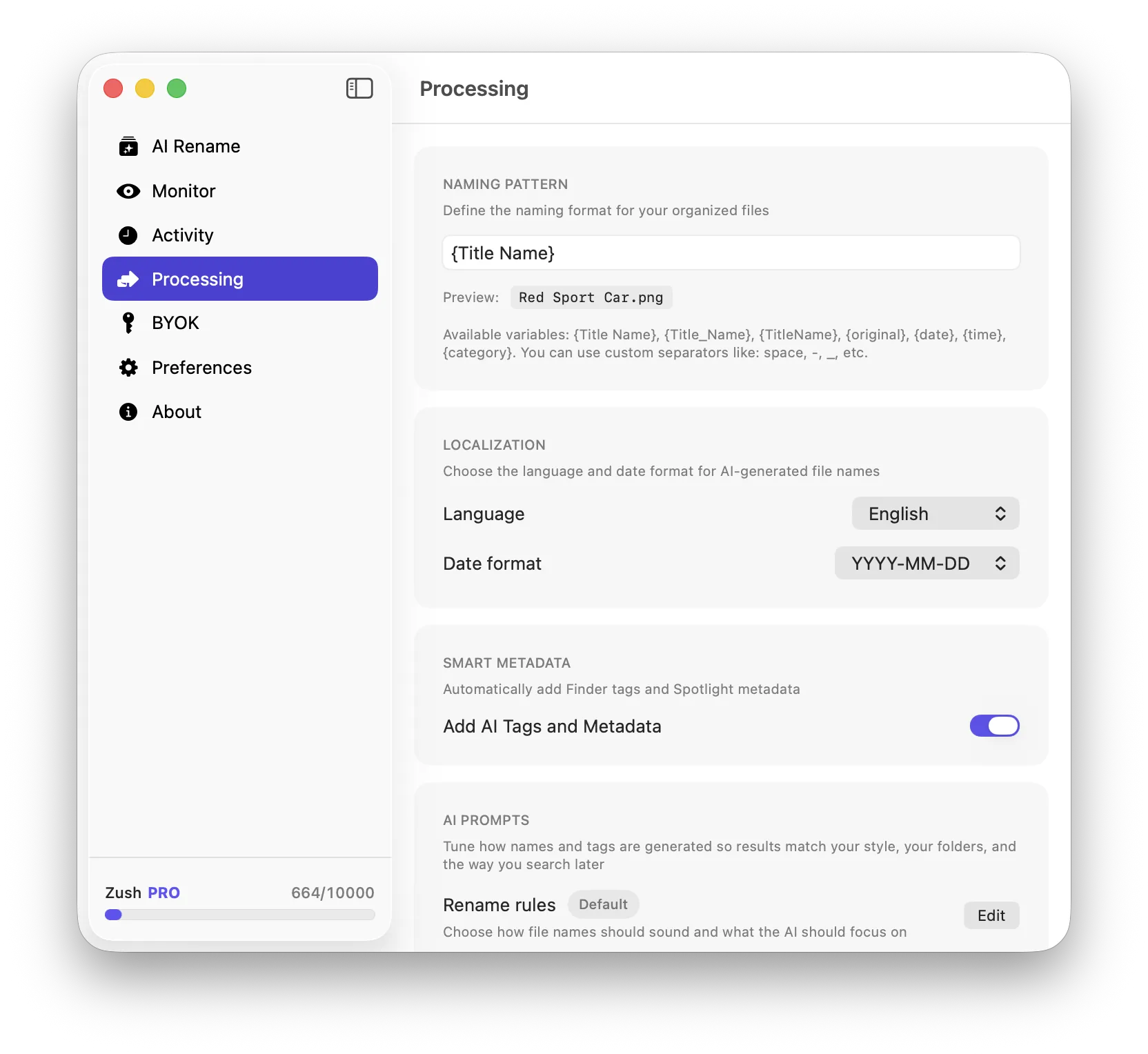
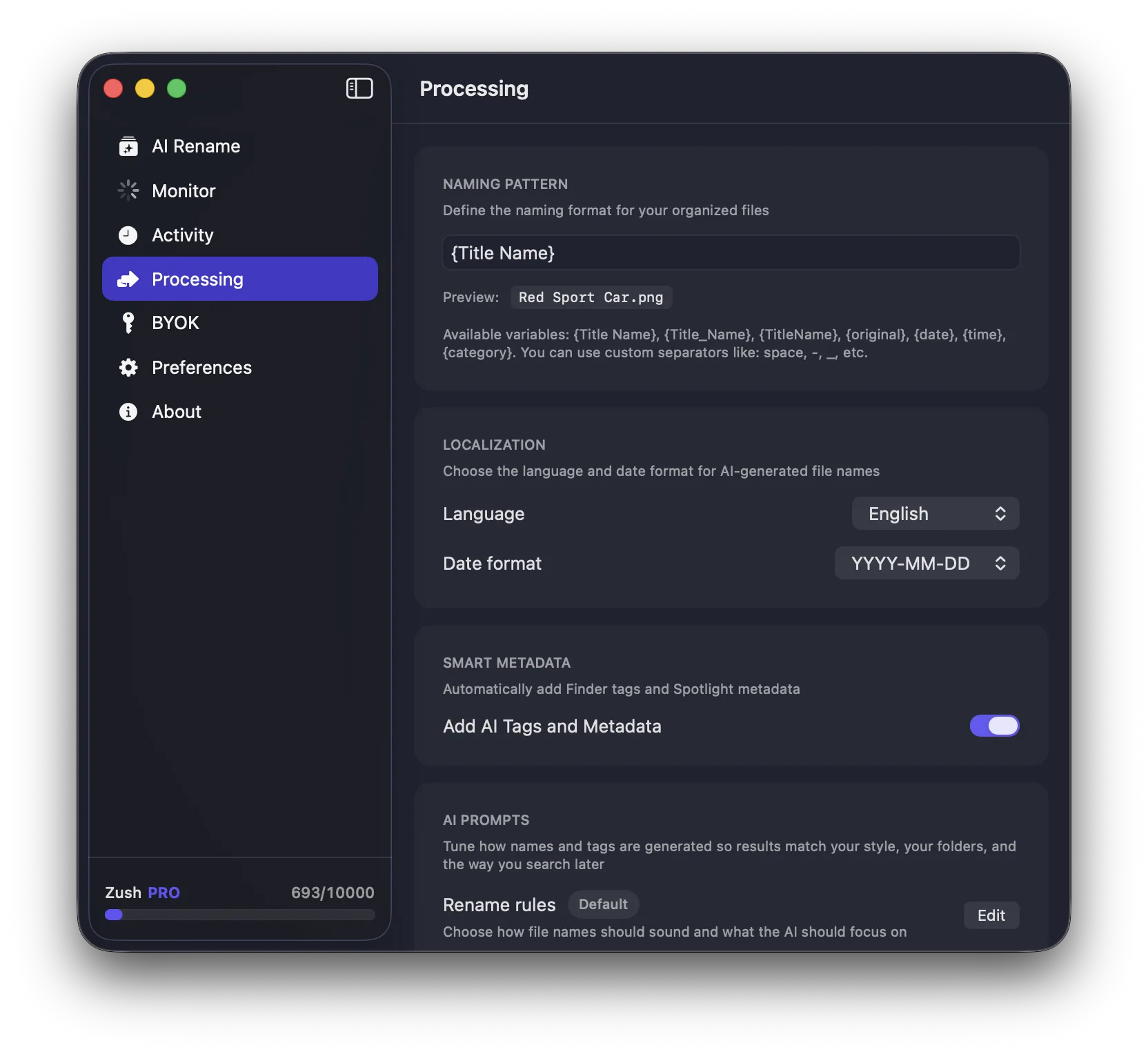
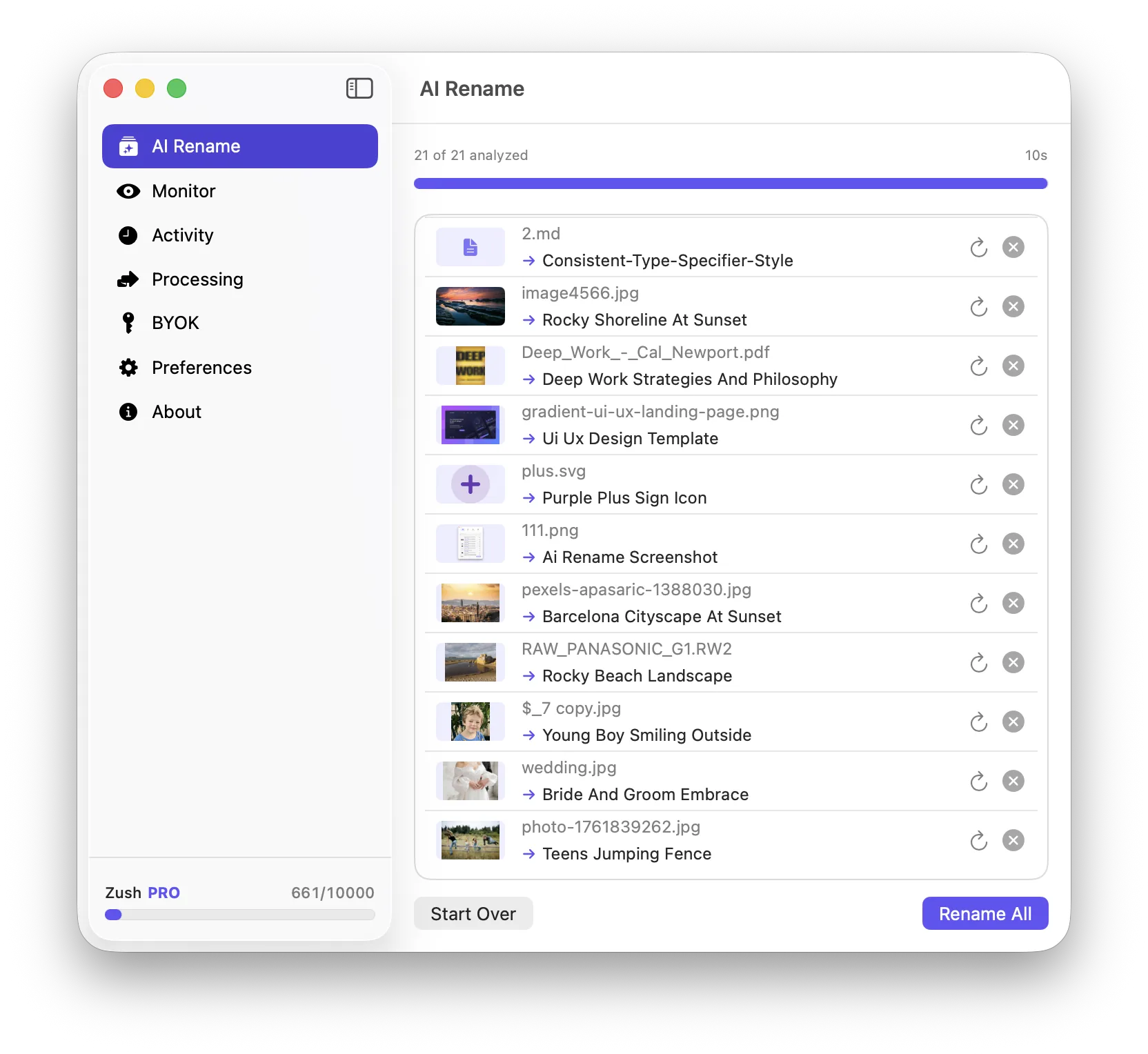
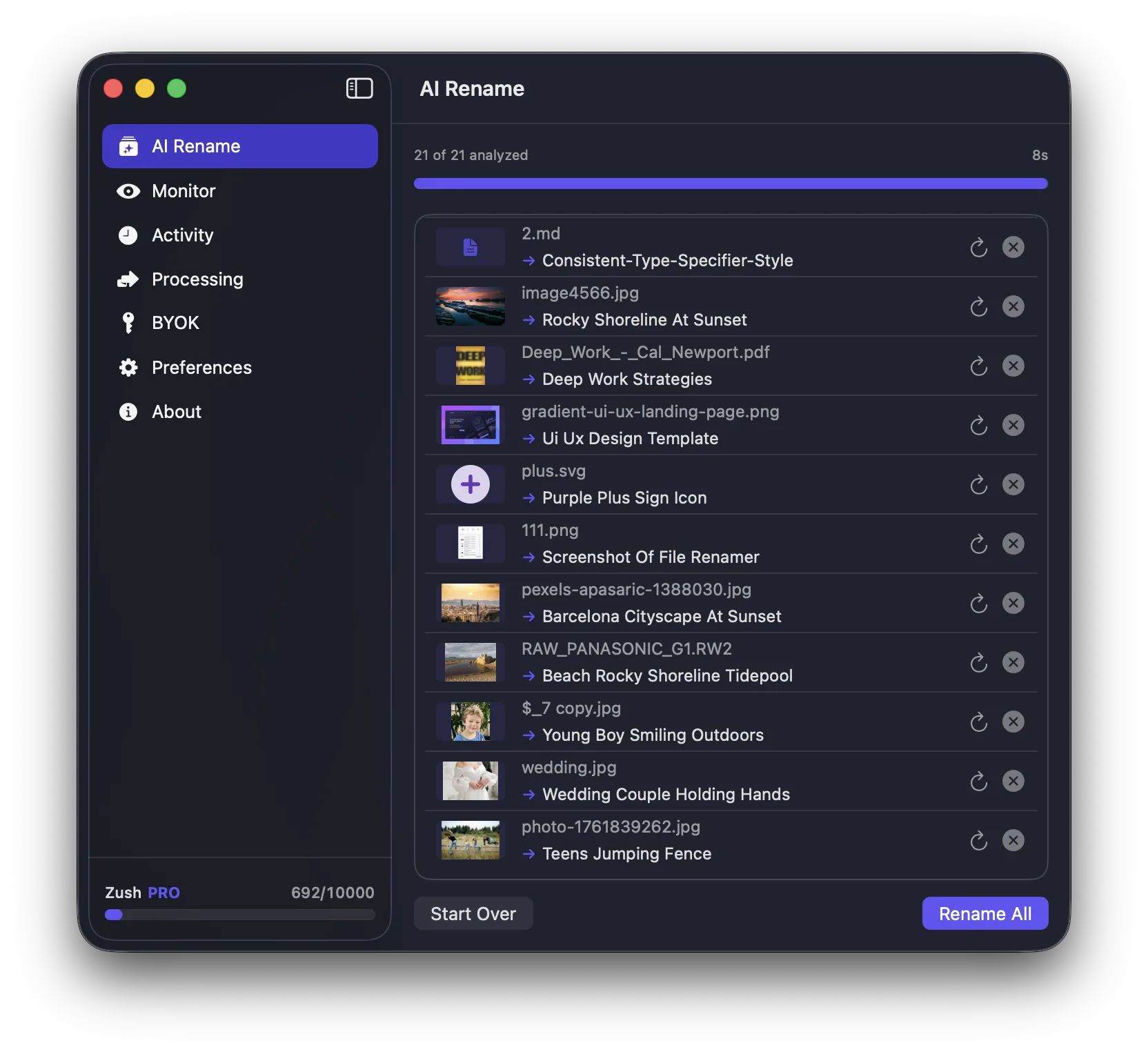
standing-desk-home-office.jpgsourdough-bread-golden-crust.jpgminimalist-checkout-flow-ui.png
Bad examples:
IMG_4822.jpgimage-final.pngcheap-best-seo-keywords-desk-buy-now.jpg
The best filename is descriptive, readable, and relevant to the image itself.
Best practices
- use real words
- separate words with hyphens
- keep the filename concise
- match the actual image content
- avoid stuffing extra keywords
What filenames do not replace
Good filenames help, but they do not replace:
- alt text
- surrounding page context
- image quality
- page relevance
- overall technical SEO
Why this matters for content teams
If you publish lots of images, weak filenames become a compounding problem. It is easy to leave files as IMG_ or export defaults. For image-heavy workflows, Zush can help generate descriptive filenames before those images reach the website. If you need the broader naming rules beyond SEO, read File Naming Conventions: Best Practices for Any Workflow.
Conclusion
Image filenames are a simple SEO win. Keep them descriptive, keep them honest, and make them part of your normal publishing workflow.